Project Freedom and the Hormuz Risk Premium
Headlines say oil shock. Brent's December contract trades roughly $18 below the front month. The structural read is more interesting than the war read.
The headlines this week are about a war. The futures curve is pricing something narrower.
On Sunday, Yahoo Finance ran the line “US Moves to Break Iran’s Chokehold on Hormuz.” Inside the story: US forces sinking small Iranian boats, missiles striking a refinery in the UAE, a Barakah tanker hit, Brent flirting with $110, and warnings of “physical shortages” pushing prices toward $120. By Wednesday, Brent had done the opposite. It fell more than 8% to below $101 per barrel on signs of diplomatic progress.
That gap, between what the headline implies and what the curve is implying, is the part of this story most readers are missing. We think it’s also the part that matters most for how to think about the Strait of Hormuz over the next two years, not the next two weeks.
What Actually Changed This Week
Two things, and they’re easy to conflate.
First, on May 4 the White House launched what it calls Project Freedom, a US Navy operation to escort merchant ships out of the Persian Gulf. The President pledged to free roughly 2,000 stranded vessels, framed as a “humanitarian gesture for tankers from countries not involved in the US-Iran war.” The mission is narrower than it sounds. As CNN’s reporting on the mechanics of the operation makes clear, US warships are not directly escorting individual commercial vessels through the strait. They are clearing transit windows and providing area denial against Iranian small-boat and mine threats.
Second, Iran’s Islamic Revolutionary Guard Corps Navy announced that “safe transit through the Strait of Hormuz will be ensured” once US operations end and “new procedures” are in place. Those procedures will reportedly run through a new entity called the Persian Gulf Strait Authority. That phrasing has not gotten enough attention. It is the language of an institution, not a tactic.
Put differently: this week the US asserted an enforcement capability it had not previously chosen to exercise, and Iran, in response, started building a permanent administrative architecture for transit. Both moves are the opposite of ad hoc.
Why the Hormuz Premium Has Been Mispriced for a Decade
Long-dated oil prices carry an embedded premium for chokepoint risk. The Strait of Hormuz handles roughly 20 million barrels per day, about 20% of global liquids consumption and more than a quarter of all seaborne oil trade. Almost everything Asia consumes flows through it. China, India, Japan and South Korea together absorb roughly 69% of all crude moving through the strait. There is no functional alternative.
Markets have priced this fact one of two ways for most of the last twenty years.
In quiet periods, the premium has been near zero. Traders treated Hormuz as a “tail” risk, something that would matter only in a closure scenario nobody seriously expected. The 2019 tanker attacks, the September 2019 drone strike on Saudi Aramco’s Abqaiq facility that briefly knocked out 5.7 million barrels per day of Saudi production, the periodic mine scares. None of them produced lasting term structure changes. The market priced them as noise.
In active crisis periods, the premium has spiked, then collapsed. Look at the 1990 Gulf War, the 2003 Iraq invasion, the 2011 Libya disruption, the 2022 Russia-Ukraine shock that drove Brent to a March 2022 peak above $139. Each one looked like a regime change in the moment. Each one resolved through a combination of strategic reserve releases, OPEC spare capacity, and time. We covered the historical pattern in detail in our analysis of 50 years of oil-shock outcomes.
What the market has not priced is a third regime: one where the chokepoint risk gets institutionally managed. That is what this week’s combination of Project Freedom and a formal Iranian transit authority is hinting at, and the futures curve is the first place to look for evidence.
The Curve Is Saying “Severe and Temporary”
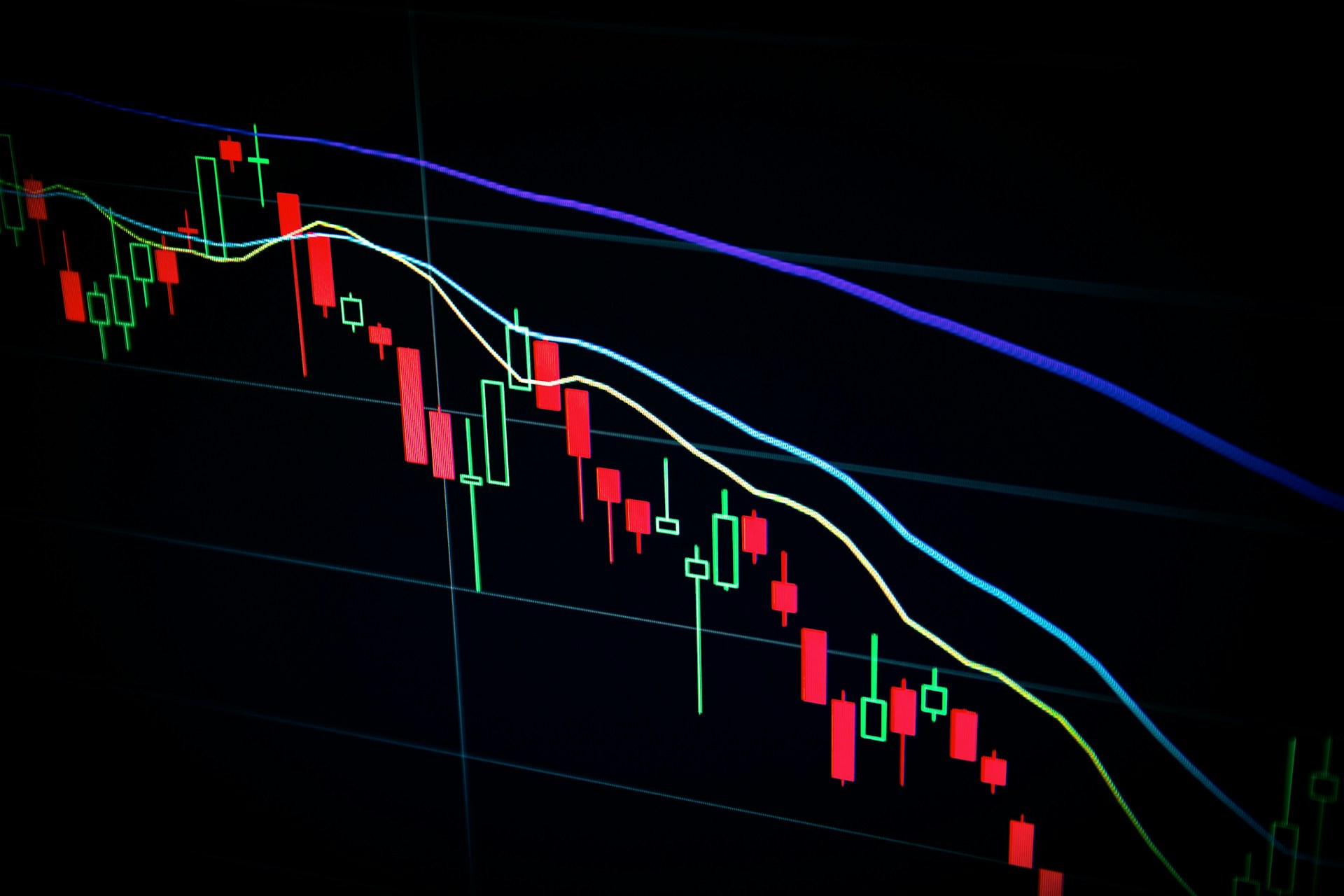
A backwardated curve, where near-term prices trade above later ones, is the market’s way of saying “scarcity is acute right now, but I expect it to ease.” The current Brent term structure is in deep backwardation. As of this week, the spread between June 2026 Brent and December 2026 Brent is roughly $18 per barrel. The June 2026 to June 2027 spread is closer to $22.
That shape carries information. Translated into plain English, traders are saying: “the immediate disruption is real and severe, but I am not willing to pay anywhere close to spot prices for a barrel I take delivery of a year from now.”
There are two ways to read that. The benign reading is that the market expects either a diplomatic resolution or US enforcement to neutralize the disruption within months. The less benign reading is that the market sees demand destruction coming faster than supply repair, which would also pull the back end of the curve down.
Both readings are deflationary for long-term oil prices. Neither one is consistent with a sustained $100-plus regime.
If you’ve been following the back-end signal, this is consistent with what we wrote when Brent first broke below $85 earlier this spring and with the IEA’s recent demand-decline forecast for 2026. The headlines change. The structural picture has been pointing the same direction for months.
The Doctrinal Shift Most Investors Are Missing
The reason this matters beyond a single news cycle is the change in US posture. For most of the post-Tanker War period (1987 onward), American doctrine in the Gulf has been deterrence by presence. Carrier groups in the region, freedom-of-navigation operations, the Fifth Fleet headquartered in Bahrain. The implicit message: we will be expensive to fight.
Project Freedom is different in degree and arguably in kind. It is the first time in the modern era that the US Navy has actively cleared transit lanes and disabled adversary surface combatants in the strait, with a publicly named operation and a stated objective of moving stranded commercial tonnage out of the Gulf. Wikipedia’s running tally of the 2026 naval blockade timeline catalogues the specifics, including the April 19 disabling of the cargo ship Touska by USS Spruance. Whatever one thinks of the policy, the precedent is set.
Combined with the Iranian Persian Gulf Strait Authority announcement, the post-crisis equilibrium starts to look like a rules-based transit regime rather than a permanent state of latent crisis. That is a structurally lower long-term risk premium for chokepoint disruption, not a higher one. It is the inverse of how most coverage is currently framing it.
What This Means for Portfolio Construction
We’re not going to tell you what to do with this. We will tell you how we’re thinking about it.
| Question | What the data is saying |
|---|---|
| Are long-dated oil prices likely higher or lower in 12-24 months? | Curve implies materially lower |
| Is the energy equity “geopolitical option” gaining or losing value? | In our view, losing, if a rules-based regime takes hold |
| What does this imply for inflation expectations? | Initial spike, then mean reversion as the curve front-loads the shock |
| What about defense and shipping equities? | Different stories. Defense has priced the doctrinal shift; shipping is still capacity-constrained |
For investors thinking about portfolio implications, the broader question is what regime you’re in for the equity-bond correlation and how oil-linked inflation expectations interact with rate paths. The answer depends in part on whether you read the current spike as a one-time shock or a regime change. The futures curve has cast its vote.
What We’re Watching
Three signals will tell us whether the structural read is right or whether we have to re-think it.
The shape of the curve. If December 2026 Brent starts to rise faster than June 2026, that is the market changing its mind about “severe and temporary.” Watch the spread, not the spot price.
The Persian Gulf Strait Authority documentation. If formal procedures appear and major flag states (Marshall Islands, Liberia, Panama) sign on, that is the institutional regime taking shape. If it stays a press release, the structural thesis weakens.
US naval posture after a ceasefire. A drawdown after diplomatic resolution suggests Project Freedom was tactical. A continuation suggests the doctrine has shifted permanently. The difference matters for every long-dated commodity assumption.
The headlines this week will keep being about the war. The more important story is being written in the term structure and in the institutional language coming out of Tehran. Both are pointing the same direction. It is not the direction most coverage assumes.
Forward-looking statements reflect Ferrante Capital’s current analysis of public market data and are not predictions. Markets, policy, and military events evolve rapidly; nothing here should be read as a forecast of any specific outcome. Ferrante Capital LLC is a Registered Investment Adviser. This article is for educational and informational purposes only and does not constitute investment advice or a recommendation to buy or sell any security. Please consult a qualified financial professional before making investment decisions.